Skip to content
The Archive
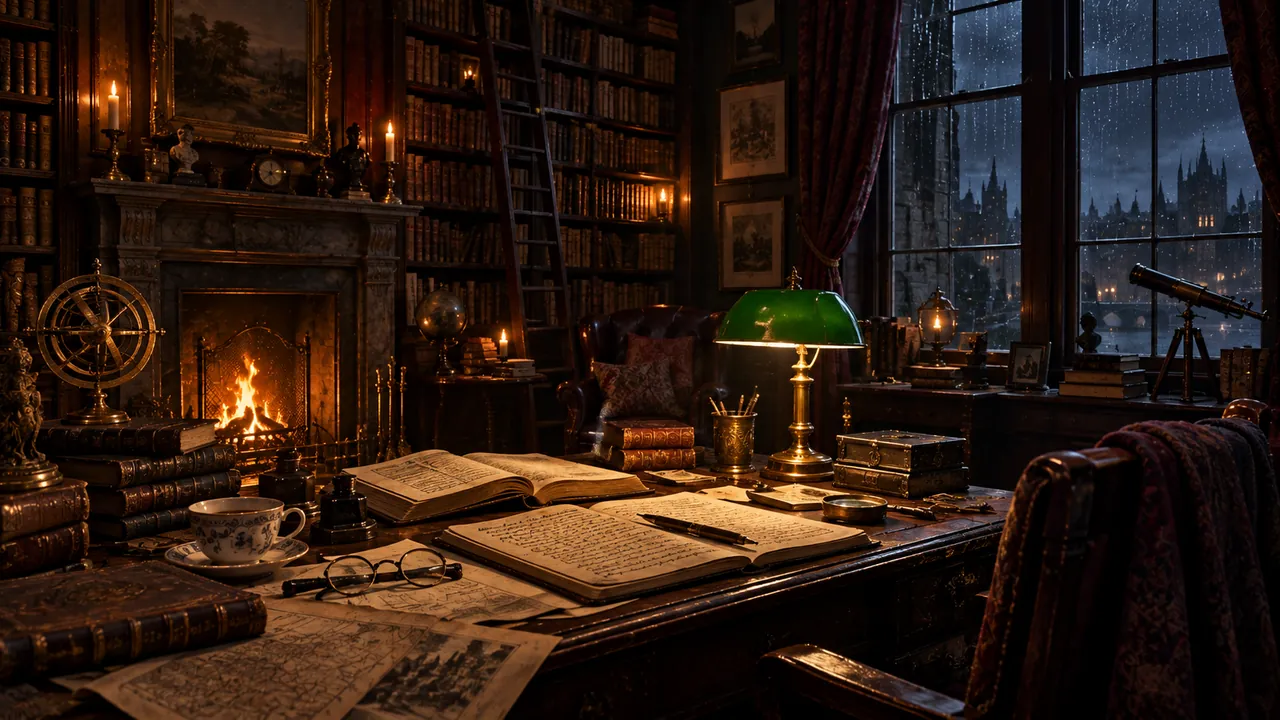
A Victorian scholar's library with handwritten manuscripts, books, a brass lamp and a fire on a rainy night.

Literature

Dracula and the Making of the Modern Vampire

Folklore, Fiction, History, and the Reinvention of an Immortal Monster

  • Status: complete
  • Added 7 October 2026
  • Updated 7 October 2026

The vampire we recognize today was not invented in one moment. Across European communities, diverse traditions about dangerous or returning dead developed long before Bram Stoker. Eighteenth-century administrative and medical reports helped carry some of those traditions beyond their original settings. Nineteenth-century authors including John Polidori, the creators of Varney the Vampyre, and J. Sheridan Le Fanu transformed the revenant into an aristocratic, seductive and psychologically compelling literary figure. In 1897, Stoker assembled elements of folklore, fiction, historical reading, Gothic convention, and modern Victorian life into Dracula. His surviving notes document the adoption of the name Dracula from historical material, but do not establish that the Count was primarily modeled on a detailed biography of Vlad III. The novel itself combines blood, contagion, desire, religion, technology, information, gender and imperial-era anxieties without reducing to any one interpretation. Theatre and cinema then altered the vampire's appearance and rules, while later storytellers remade the monster as lover, outsider, antihero and more. This investigation distinguishes documented sources from probable influence and later myth, tracing how repeated transmission, reinterpretation and cultural selection produced a seemingly ancient monster that never stops changing.
  • dracula
  • bram-stoker
  • vampire
  • vampire-folklore
  • gothic-literature
  • literature
  • vlad-the-impaler
  • vlad-iii
  • transylvania
  • romanian-folklore
  • european-folklore
  • revenants
  • john-polidori
  • the-vampyre
  • varney-the-vampyre
  • carmilla
  • sheridan-le-fanu
  • victorian-literature
  • nosferatu
  • bela-lugosi
  • hammer-horror
  • film-adaptation
  • cultural-history
  • literary-history
  • horror
  • mythmaking

Evidence Landscape

Primary Evidence

Strong

Substantial primary evidence includes Stoker's 1897 novel and surviving working notes, nineteenth-century literary predecessors, William Wilkinson's historical account, Emily Gerard's reported folklore, eighteenth-century administrative and medical reports on suspected revenants, and subsequent theatrical and cinematic adaptations. These sources firmly document important stages of transmission and transformation. They do not prove that all regional traditions were uniform or that every apparent literary similarity reflects direct borrowing.

Scholarly Consensus

Moderate

Strong scholarly support exists for the heterogeneous nature of earlier revenant beliefs, the importance of nineteenth-century literary predecessors, Stoker's documented use of some historical Dracula material, and the role of later adaptations in shaping popular vampire conventions. Interpretations of the novel's symbolism, the degree of particular direct influences, and the causes of Dracula's exceptional cultural longevity remain more contested. Moderate therefore describes the overall synthesis rather than denying agreement on its better-documented components.

Interpretive Uncertainty

Significant

The surviving documentary record establishes many key stages in vampire history but does not resolve the origin of every familiar vampire rule, the exact paths of all folkloric transmission, or the extent of Stoker's knowledge beyond his surviving notes. Textual interpretations involving sexuality, disease, empire, religion and gender have varying strengths and cannot automatically be treated as evidence of authorial intention or contemporary audience reception. The relative roles of symbolic adaptability, commercial distribution and historical contingency in Dracula's success remain uncertain.

Open Questions

Significant

Major unresolved questions include the earliest reliable attestation and transmission path of each vampire trait; why Dracula rather than competing Gothic works became globally dominant; how southeastern European traditions appeared before Western-language collection and classification; how readers and audiences actually understood Dracula in different historical periods; and whether vampires are more culturally adaptable than other durable monsters. The highest-priority follow-up is a primary-source genealogy of the vampire rulebook.

These indicators describe the state of the evidence, not the probability that any particular theory is correct.

Choose Your Depth

Every investigation can be explored at four levels. Start with the story or open the entire research file.

  1. 01 — Reader Edition

    Enter the Story

    DRACULA

  2. 02 — Standalone Research Synthesis

    Examine the Evidence

    A structured synthesis of the evidence, competing explanations, uncertainty and conclusions.

  3. 03 — Full Investigation

    Open the Files

    The complete research journey: evidence gathering, rival hypotheses, challenges, corrections and reconstruction.

  4. 04 — What Comes Next

    Continue the Search

    The highest-value unresolved questions and the future work capable of overturning current understanding.

Follow Another Thread

Literature

Complete

The One Ring

A deep investigation into J.R.R. Tolkien’s One Ring and what it reveals about power, possession, domination, temptation, moral weakness, mercy, redemption, and the limits of human agency.

  • J R R Tolkien
  • The One Ring
  • The Lord Of The Rings
  • Middle Earth

4 of 4 documents available

Enter Investigation